A team buried in its inbox
One small customer service team answers every dealer from a shared inbox. The team is good, and the dealers like them. Volume was the problem. In one month, first replies slipped from 24 hours to 84, and the people answering were spending their mornings sorting instead of helping.
Leadership wanted the team's time back without adding software. Anything new had to run inside the Microsoft 365 setup the company already paid for. One rule never bent: no reply reaches a customer without a person approving it.
Measure before building
I audited 1,010 real emails to learn what the team was being asked, across 25 kinds of request. That audit became the spec.
The assistant went live 29 days after build kickoff. It reads each customer email, sorts it, and drafts a reply from the company's own templates and product facts. In its first month, 97 percent of the emails it handled had a reply inside the 48-hour goal, with a median under an hour.
The drafts were fine. They were in the wrong place.
What the logs said
After launch I read every rejected draft in the decision log by hand, 330 of them. About 95 percent of the time, the reason had nothing to do with the writing. The team trusted the drafts.
The drafts lived in Teams. The team lived in the inbox. The tool sat outside the window where the work happened.
Move the work to the team
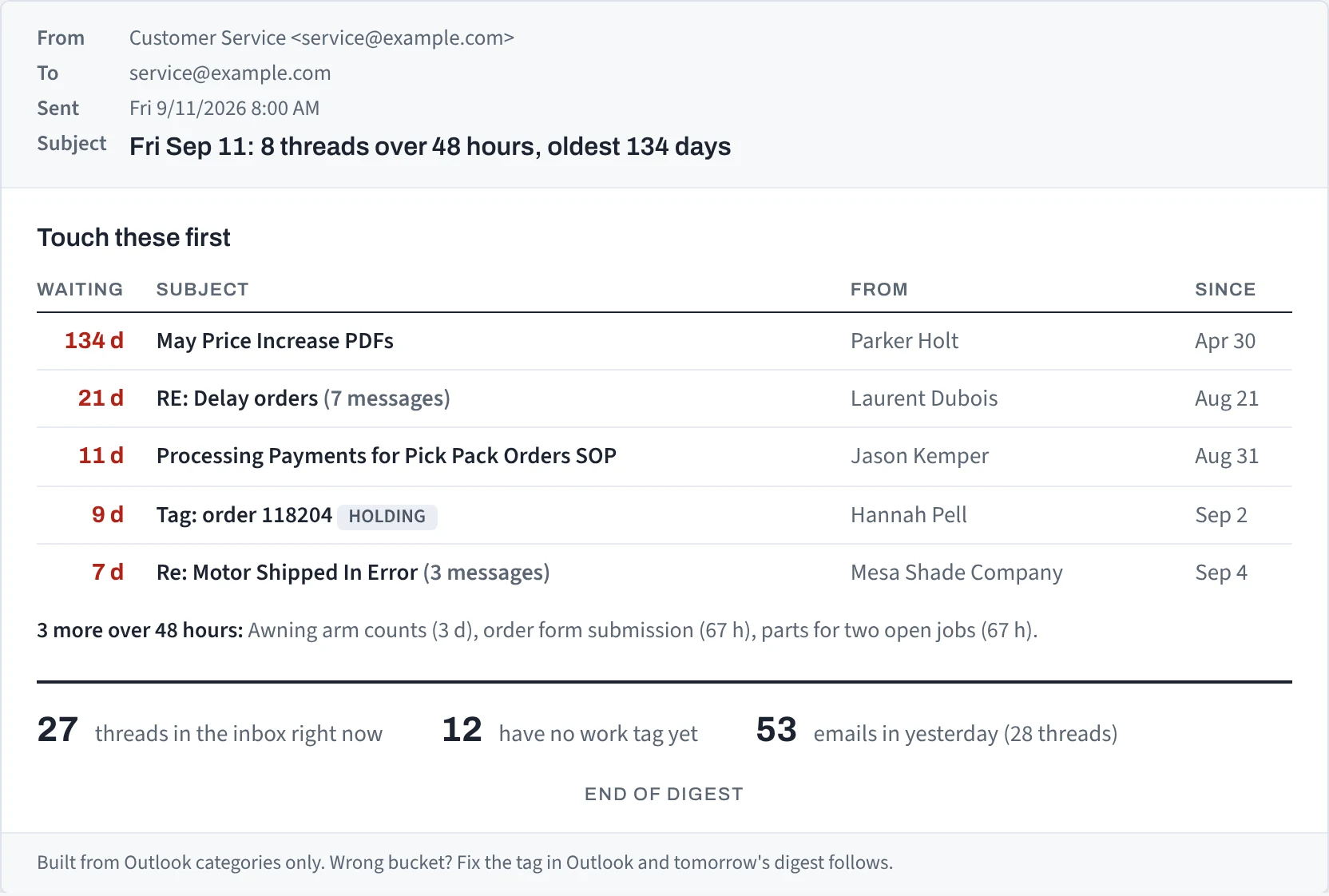
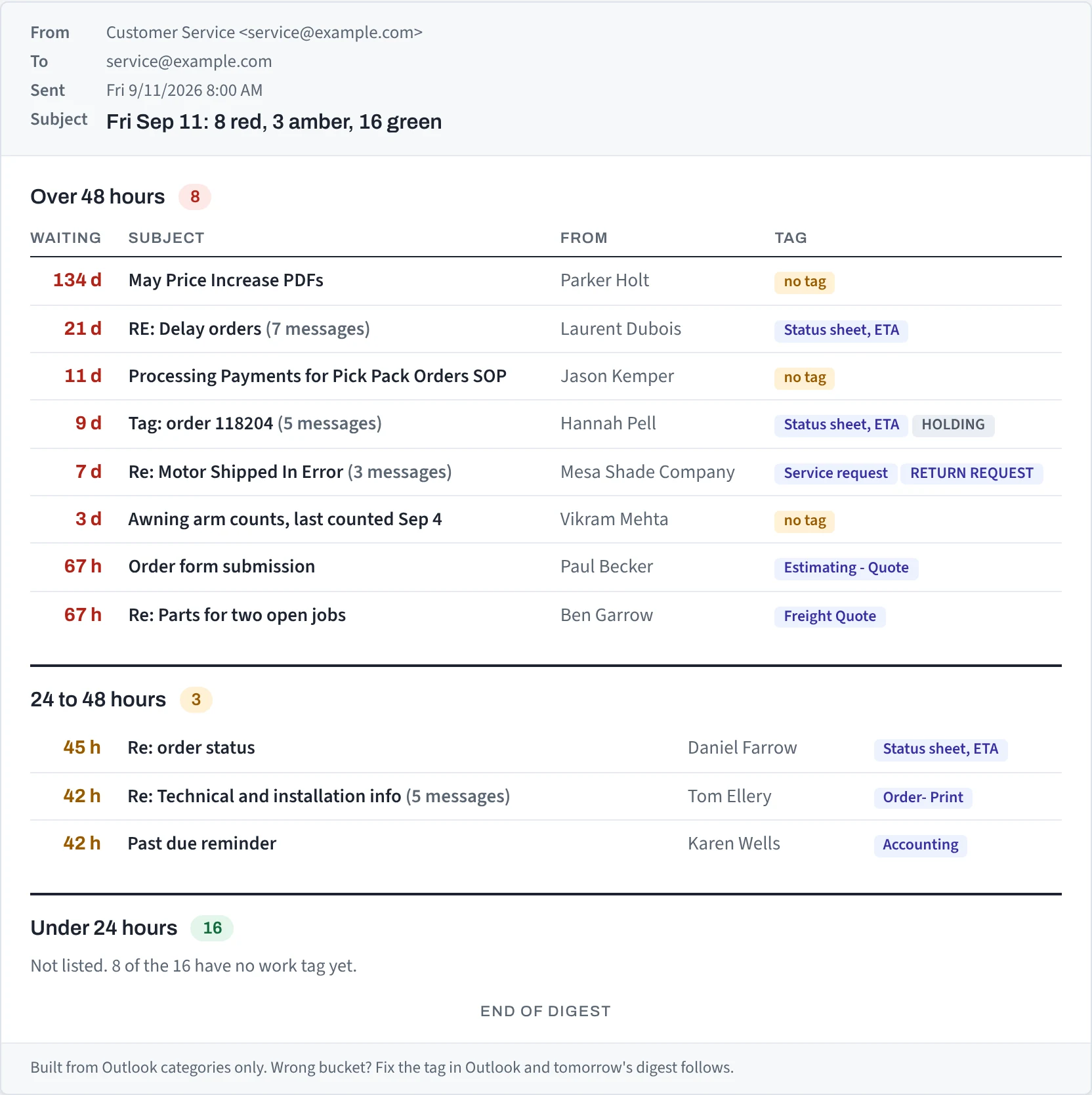
First, a morning digest. Every open thread, oldest first, in the team's inbox before the day starts, built on the team's own rules for what counts as open, done, and waiting. It went from three mockups to their inbox in five days. It replaced a report the team lead had been building by hand for an hour or more every morning.
Then the drafts moved into Outlook, inside the customer's own thread, ready to check and send.
Nine days after the digest went live, the team counted 14 emails in the whole inbox, the oldest from that Monday. It used to hold 30 or more that had waited a week.
Keep measuring
When AI usage climbed, the run records showed the cost sat in how much each email sent to the model, not in volume. The leaner version went live four days after that finding and cut the cost per email by about 60 percent.
Every draft, decision, and digest is logged to one dashboard, so leadership sees the same numbers the team does. The same approach now tells 13 people each morning which production orders are running late.
What I would do differently
I built where the system was easiest to build, not where the work happened. I now treat where a tool lives as a first design decision, made before the architecture and not discovered after launch.